Life’s Music

I was listening to a piece by Dvorak recently. I was enamored at the time by the brass section at the time. The euphonium was robust and proud. It filled me with glee as the entire brass and woodwind section grew and seemed to explode toward the end of a phrase. As I was still calming myself from the euphoric explosion, I heard a small flurry of instruments that played a rather quick, soft part. I had to rewind to discover it was the strings. Then the brass section again came prancing in. This cycle occurred twice before moving to the next phrase. 

It caused me to pause.

Although we are all awed and overwhelmed by the majesty of the brass, the subtler strings often are the ones that bring us to tears. When the Violins play, there is often a skillful soloist that pours their very soul into the performance of a piece. They are then greeted with thunderous applause in recognition; the concert master is almost always the first chair violinist. Names like Isaac Stern and Yoyo Ma come immediately to mind when we think of the strings, and orchestra in general.  

What of the viola? Were you even aware of such an instrument’s existence? To those ignorant of the orchestra, it appears to be a violin, but it is unique and essential to harmony. Can you name me an oboist? Perhaps a bassoonist? Could you even point out a bassoon in the orchestra? Yet these instruments provide important harmony and counter melody in numerous pieces that add richness and depth. 

These all get a grandiose stage. What of the Mandolin? It used to be the instrument of choice for vocal accompaniment for centuries. Even now, it is quintessential to the bluegrass world. The modern music companion is the trusty guitar. Is it inferior to the seductive violin or boisterous clarinet? No. In fact, most modern music features the guitar as the lead instrument, and power guitar solos frequent the favorite songs of our time. Unnoticed often in the background is the faithful drum keeping the rhythm and driving the song forward.  Though it is “least” among the modern band essentials in prominence, it is far harder to master than the guitar, bass, or piano/keyboard. 

By now, I trust you’ve see my point. We are all instruments in the grand concert of this life. God is the one that has given us each an “instrument”, perhaps multiple. The one that is the Piano of life is no less important than the Viola. You also would not expect to hear a cornet in a hard rock ballad, nor a synthesizer in a fugue. Every instrument has a purpose and a genre in which it shines. We must all realize our own instrument/s and genre/s in which to perform. We also should not overestimate our part in the concert of life, but recognize it for what it is, and appreciate the part that others also play. 

It is also important to note that if we are instrumentalists in the concert we are all equal and subservient to the conductor, and that conductor is Christ. Without Christ orchestrating the concert of life, the sections compete against each other, the soloist attempt to out due each other,and an atonal cacophony results that gives everyone a migraine.

Know your parts, love the other parts, and follow the conductor.

There is more than one instrument in the wondrous symphony of life.  
Not Some Empty Space for Rent

I’ve had enough of seeing love

Being played like some game

I know why the good old days are gone

Cause everyone just tolerates whats wrong

I’m not some empty space for rent”–“Innocent”–Stellar Kart

Why do we treat love like a game? Why are we comfortable with having “lovers”, but no official commitment to those individuals? Why are we so quick to give away the most valuable, physical capability we posses (both intrinsic and extrinsic)? Why has culture gotten to the point where sex with anyone and everyone is the norm? Do we really think so little of ourselves? Do we really think so little of each other?

Well, “I am NOT some empty space for rent.” And neither are you.

You are special, made in the image of God. You are the crowning achievement of God’s creation, so is every man and woman. All people are intrinsically valuable because they bear the image of God, they are a unique creation, with a valuable and unique purpose. The deepest expression of commitment, love, and passion towards another individual is sex. It is a deep bond, an emotional euphoria, a physical high, and a spiritual fusion. Why are we so quick to spend it on whomever? We are renting out something that should be saved and spent for one person, for life.

I believe we’ve mistaken love for lust. Lust is selfish, it seeks to satisfy itself. Lust is impatient, it destructively seeks immediate results at the cost of itself and others. Lust is insatiable, it constantly demands more. Lust is not Love.

Love…is patient, it is kind, it is not prideful, it is not rude, it never fails. Love is a choice, love is a commitment, love is a bond. The society we find ourselves in is saturated with instant gratification at whatever cost. We are incapable of loving in this culture because of this. The only way we can learn to love again is to invest in each other. Sex is beautiful, but it is a product of true love; not a cause. What means more? Sex with multiple people; living thrill ride to thrill ride, with little to no investment else wise, or sex with one person whom sticks with you “for better or worse, for richer or poorer, in sickness and in health, as long as you live”?

Love, not lust is what we need to seek. I don’t want to be an empty space for rent. I want to be a home. A home that is dwelt in for a long time. To provide pleasure and protection. Security and freedom. Shelter from the storm, and the fire’s warm caress.  For life, not a whim. For love, not lust.

Sharing a Good Meal–A Christian Imparative

Tonight I went out with a friend to a Turkish restaurant here in Nashville. It is one of my favorite places to eat, but my friend had never been there; naturally, I introduced him to its splendor. Although the food was of high quality, which no doubt facilitated the ambiance of the evening, the food itself was not the sole progenitor of our jubilant communion. The atmosphere of the restaurant was authentic, serene, and relaxed. The conversation, granted I did most of talking, was pleasant and light. We shared a mutual joy over the care put into the meal’s preparation, and the fantastic quality of our dining experience. We then went to Starbucks, enjoyed coffee, and the laid back environment that Starbucks usually offers. 

Tonight’s escapades reminded me of a few Bible verses: 

Psalm 34.8 “Oh taste and see that the Lord is good…”

Acts 2.46 “And day by day, attending the temple together and breaking bread in their homes, they received their food with glad and generous hearts

Romans 12.13 “Contribute to the needs of the saints and seek to show hospitality.

There is something to be said about sharing a meal with people. In almost every culture through out time the most intimate and common form of bonding within a culture occurred at the dinner table. There is something about sharing a meal together that removes our inhibitions and hostilities. Even the most reserved people enjoy dining in a small group setting. We seem to be designed to enjoy food and the companionship of others. The Psalm I quote speaks of tasting the goodness of the Lord. Elsewhere, the Bible mentions that God both satisfies the need and desire that we have with good things. The Christians in Acts shared everything in common and supped together daily, which strengthened their unity, and no doubt served to help them stand against the persecution to come. In Romans, Paul exhorts the believers to seek out opportunities to extend hospitality to anyone and everyone. Jesus himself frequently speaks on the importance of hospitality to everyone; we also see him frequently enjoying meals with others, where he could teach and commune on a personal, intimate level. 

I wonder how much diplomatic tension could be resolved over a good lamb kebab and Turkish coffee? Seriously, there is something about sharing a meal together that encourages us to seek common ground and peace among our fellow man, regardless of the vast diversity we have. Obviously, total peace is impossible without the return of Christ. However, Scriptures command us “as much as is within your power, live peaceably with all men”. The idea expressed is intentional; it is that seeking element, even a yearning. Intentional, planned, sought after, longed for. This is the attitude we should have toward hospitality, and communion. We best demonstrate a love for each other and those around us by being intentional, purposeful, and hospitable.

Seek to share a meal with someone. Eat with a friend. Eat with a professor. Eat with an enemy. Eat with a homeless man. Eat with family. Eat with, man. Share the love, communion, and common grace that God so freely pours on us all, and desires to see manifest in His image-bearing creation.

Feeding on Death

I fear we feed on death.

The culture tries to disguise,

And escape the cold, hard fact.

Vanity numbs us to our demise.

False senses of peace refract.

I fear we feed on death.

“On death,” he says. Ha, he is no prophet!

Has he not heard of “going concern”?

Life is to capitalize! And turn a profit.

Profit on living and life; you fail to discern.

With this aptly spoken, we will now adjourn.

You fail to see, because you’ve failed to learn:

I perceive that you feed on death:

Out with the old and in with the new!

This is your scripture and in it you feed.

Upon expiration, what will become of what you accrue?

Your focus on consumption, not consumer, is a poisonous seed.

I perceive that you feed on death.

If anything, sad sage, you’ve proven our point.

We strive to meet needs and desires of life.

The world is ever changing, each new day a disjoint.

We distract from futility, and death, and strife.

Death is what we shy far from, and despise;

To do other is incredulously unwise.

You are indeed fools, muffling the people’s cries.

You see, it is undeniable you feed on death.

You market things that break down in but a few years;

This does not distract, but proves life’s brevity and end.

These cover symptoms at best; they don’t appease people’s fears.

Cover-ups, and false solutions prove nobody’s friend.

You see, it is undeniable you feed on death.

Hear examples of how you feed on death:

Plant or animal must die, for the belly to be fed;

Name me a movie, song, or story, where death has no dominion;

Petroleum is compressed death, then burned to get man ahead

Causes of war are painted as difference in opinion.

Here are a few to prove you feed on death.

You have no basis for stating such trash!

People cry out for solace from the true fact.

We, last of all, would think on a truth so brash.

No option is better, all else has no impact.

What solution could you have to the materialistic gods?

Your death is upon you too, and that relentlessly prods.

Your gods imposed on culture breed nothing but odds.

There is a solution to feeding on death.

Past status quo embraced a memento mori,

And did not conflict with your precious carpe diem.

This dichotomy between the two is the problem to the story.

A solid marriage of the two is the proper theorem.

This is the beginning to not feed on death.

You must recognize death.

It is a reminder of life’s value and beauty.

It makes one ponder what is a worthy investment.

To live life in knowledge of death is life’s sacred duty.

This is the answer, according to truth’s assessment.

You must recognize death.

It is… impossible to reconcile the two.

I cannot perceive how to live with this.

Live bold. In view of death? How can it be true?

I have not the ability; I must, sadly, dismiss.

I wish to believe such a wondrous notion,

But there is within me no such devotion.

That anything of earth could create such? That would be a costly potion!

There is something greater than death.

I said that your scriptures are based in the temporal,

There’s another Scripture, of triumph in death and life.

The hole in our hearts, and fears, though several,

Are satisfied and death plunged deep with a knife.

There is someone greater than death.

Do not feed death, retreat death!

Look deep in you, nothing you try can satisfy.

Die to the old, and be born anew, is the Gospel story;

Your former creed, but Christ-modified.

It is a life filled with hope and ending in glory.

No need to feed death, death has retreated.

Content with an Unmarked Grave

“The cross is laid on every Christian. The first Christ-suffering which every man must experience is the call to abandon the attachments of this world. It is that dying of the old man which is the result of his encounter with Christ. As we embark upon discipleship we surrender ourselves to Christ in union with His death—we give over our lives to death. Thus it begins; the cross is not the terrible end to an otherwise god-fearing and happy life, but it meets us at the beginning of our communion with Christ.

When Christ calls a man, He bids him come and die. It may be a death like that of the first disciples who had to leave home and work to follow Him, or it may be a death like Luther’s, who had to leave the monastery and go out into the world. But it is the same death every time—death in Jesus Christ, the death of the old man at his call.”–Dietrich Bonhoeffer The Cost of Discipleship


I recently had an epiphany; I mean a straight up Jesus moment, a glimpse of undeniable truth beyond myself. I realized that I had been fooling myself all this time. I had been talking like I am called to do great things for Christ: fight the hypocrisy, restore love in the church, and lead the church.Based on my talents, abilities, and personality this seemed completely correct, even divinely ordained. 

But my intentions were so deceived that it took a divine oracle to smack me back to reality.

Most people don’t want to be that guy: the guy in the lime light, the martyr for the cause, the one ridiculed for what was right, the one destined for greatness whether through suffering or a blessed ministry. I am not most people; my greatest fear is that I won’t be that guy. In a sense, my fear would be that I would toil for the Lord, and all people would remember, or not remember, of the ministry I did for the Lord would be an unmarked tombstone. 

I could not settle for this. I am way too talented, way to sold out for Christ, way to charismatic, way too useful to have a mediocre role in the kingdom. Then the Lord woke me up. I was at Fido’s with a very good friend. I had treated him to coffee because he was stressed from some stuff, and I was there for advise and so he could vent.Not but 10 minutes into all that he went straight up into a mini revival. He said that it was preaching to himself, but I was deeply convicted. 

Aside from having my theology completely restructured in a period of an hour, I also realized truly how “not sold out” I was to Christ. The Lord asked me, “Are you content with an unmarked grave?” I wasn’t. I duked it out with the Holy Spirit all the way back to campus. I fought so hard, and struggled within myself, and then…I let it go. Who am I? I am a servant. I am here for the sole purpose of whatever He has planned for me.

“Your eyes saw my unformed substance;
in your book were written, every one of them,
    the days that were formed for me,
    when as yet there was none of them.”–Psalm 139:16:

It’s like I heard John Piper say in a seminar once, “True Christianity means I must be willing at any given time, on any given day, under any set of circumstances to leave it all and die.”

And I realized that I had been liberated from too much, and was too convinced of the power of the cross, and too burdened by the darkness that ensnared the people around me to quibble with God over the particulars of my ministry. I decided to be content with an unmarked grave.

Thus it begins; the cross is not the terrible end to an otherwise god-fearing and happy life, but it meets us at the beginning of our communion with Christ.

Responsible to Forgive–A Sonnet

The human heart–a strange and fickle thing.

Forgetting not offense to it past done,

Yet quick dismiss offense that it did bring.

It alienates good virtue’s loved one.


What one?– It is good sense the heart estranged.

From Scriptures, backward will the heart offend?

To think upon the cross and grace arranged,

Then not out pour in kind that grace to mend?


A parable to dwell upon dark heart!

A servant, mercy shown, did not the same.

Now dwell upon this long! These words impart:

Do not so dare to treat Christ’s death a game!


Forgive in all, to all, without excuse;

Do not subject the cross to such abuse. 

Rescued

Weary.

Such unrest.

So much stress.

I have fallen again.

I cannot find the light.

The darkness is closing in fast.

My bitter defeats are sapping my energy.

Precious grace melts away the dark,

Rescue from pain of shame.

The chains lie shattered.

Joyful tears flow.

I’m reborn.

Peace.

The Senses–Sound

Have you considered how often we take the senses for granted? Granted, we could possible function happily without smell and taste, but what of sight, touch and sound? Touch would be terrible to lose; sight would be devastating to lose, but sound would be maddening. 

Life without sound: No humming, whirring, or droning of the city. No chirping, babbling, or buzzing of the woods. No music. I could not maintain my sanity. Born without hearing is one thing, but to have it and lose it? I would not recover. 

Music is undeniably intrinsic to our manifold expression of self. It is something that transcends existence; that communicates a grand truth that brings us into a communion of peace. Tranquility, solace, even renewal is found in music. To lose that?! Incomprehensible. 

To be forever imprisoned in deafening silence; to be tormented by your deepest turmoil without expression or  fulfillment in a form that permeates the deepest core of being. Unfathomable. To feel the burning of insurmountable sorrow without release of self into a form of ethereal repose, or to succumb to billows of love for another  and be unable to hear their voice. Unable to melt under the soothing tone of their soft voice. 

Even the sound of silence itself is a sound, but the inability to hear would even void this unsettling friend. 

Oh the bliss! The unparalleled rapture of the ocean crashing against the shore. The soothing balm of a gentle rain on a spring night. The crushing awe of a thunderstorm reigning over the plain. The insufferable, sweet sorrow of a soft piano, or violin’s lament. The uncontrollable energy of drum beating in syncopation of a bright cornet’s discourse. The sweeping inspiration of the wind cascading across the mountains and vales.

I cannot comprehend, nor wish to entertain the thought–the inescapable weight of permanent silence.    . 

Bomb Diffusing

“How can I convince someone to avoid the bomb in their path, if I am not convinced that bomb is dangerous for me?”—Rev. David Davis

We are real good at noticing each other’s faults—we see them all the time. After all, to err is human, and we err…a lot. We also know how to call someone out, at least we think we do, when we see a brother stumble. We call them out because it isn’t what they ought to do, and when asked what the deal is we usually respond, “that’s not what you need to be doing”, or perhaps, “That’s not good”. These generic statements do nothing to deter someone from an action; it may stop them there, but it won’t halt the action/attitude from occurring again. We recognize that sin is an issue, a bomb if you will, but we don’t take it seriously enough to take action. How can we convince someone to avoid the bomb in their path, if we are not convinced that bomb is dangerous for us?

I  Corinthians 9.27 “But I discipline my body and keep it under control, lest after preaching to others I myself should become disqualified.” (ESV)


Imagine you are a scout for a military troop. Your job is to survey the road ahead for ambushes, obstacles, etc. This particular venture you stumble upon a bomb. Your training tells you to let the unit know of the ordinance in the path; but it doesn’t seem active, you may even try defusing it. No! You tell the unit to avoid it at all costs, not just side step it, but change routes. Why do we attempt to belittle the bombs in our own life? We think that a particular sin is manageable, or that it can be side stepped, but a bomb has an extensive blast radius. So too, sin cannot be side-stepped or be treated as insignificant; we need to deal with it properly, and treat it for what it is, a bomb. Of course, you can’t defuse a bomb unless you are trained to do so; you cannot diffuse sin, God is the one equipped to handle that. We must turn over our sin to the one that can diffuse it, our job is to identify it, and seek its diffusion.


Keep yourself under discipline or else how can you convince someone of the bombs on their path?

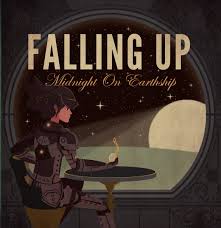
Midnight on Earthship

Image


I came across this album upon suggestion of the band by my new roommate. The group is good, but what captured me most is the this album art from their album Midnight on Earthship. I can say with the utmost sincerity I have never seen a picture that so succinctly portrays my inner persona (not likeness, but demeanor), or conveys a more beautiful thought. 

As you see in the picture, the person is staring out a window (apparently on a ship in space according to the album title) at the moon. I will discuss this more later, but I want to note the character’s demeanor. He is wearing, what appears to be, futuristic clothing that seems like a basic outfit with a gray-scale tone. This gives the impression that this person is functional, but cares for style (not fashion, but a style their own). Although the hair looks ridiculous by modern, western standards, this is a “conservative” hair-style for an  anime character (which this art-style hearkens to). They are holding something casually in their hand, and are sitting in a casual, inward-drawn position. The look of the young man (I’d say 17-24) appears, at first glance, distant and “staring off into space” (no pun intended). If you look closer, his eyes indicate a passive captivation by the moonlight he is looking at. They seem, on a deeper level, to be irreversibly transfixed on the view outside. The eyes, and body language, indicate the thoughts of this man are deep, mildly sad, perhaps contemplating his existence, or the immensity, yet cordiality of the cosmos that has seized his attention.

This is my inner self. If I was to draw the inner me, it would be this.

Note also the scene. He is not merely peering at the moon in the night sky, he is watching it rise over the landscape. Fewer things are more beautiful than a sunrise, or sunset. Part of this is due to it’s immensity and grandeur as it ascends over the horizon and mellows the higher it reaches, only to slip into slumber as it it comes down with a gentle glow. Wherever this young man is. He is close enough to a moon to watch it peek over the horizon. The beam is drawn so as to illuminate the window, and young man. There is an ethereal warmth, and peace in this portrayal. There seems to be, even, some solace in the man’s surroundings.

Put these aspects together with a title, and we now have a breathe-taking venue. Based on the title “Midnight on Earhtship” (combined with these prior thoughts) there is a feeling that we all are that man on that ship (thus Earthship). It is midnight for the purpose of the character’s solitude as well as humanity’s and ours. Despite the solitude, and feeling of insignificance from the cosmos around us, there are sights like the rising moon on the horizon that make the universe personal, loving, and—dare we say–imminent. 

All this in mind, this album cover is a statement of the human condition. We are isolated, we grapple with our own finite-ness, and are forced into contemplation at the vastness and void around us. But there appears to be some aspect of creation that speaks to us personally, and visits us in our isolation. It showers us in the wonder, splendor, and purpose of the created order to inspire and embrace us. Such a moment, is the creator placing his hand on our shoulder and whispering, “Do not fret, I’m here.”